Digital is not always the answer because nothing is always the answer
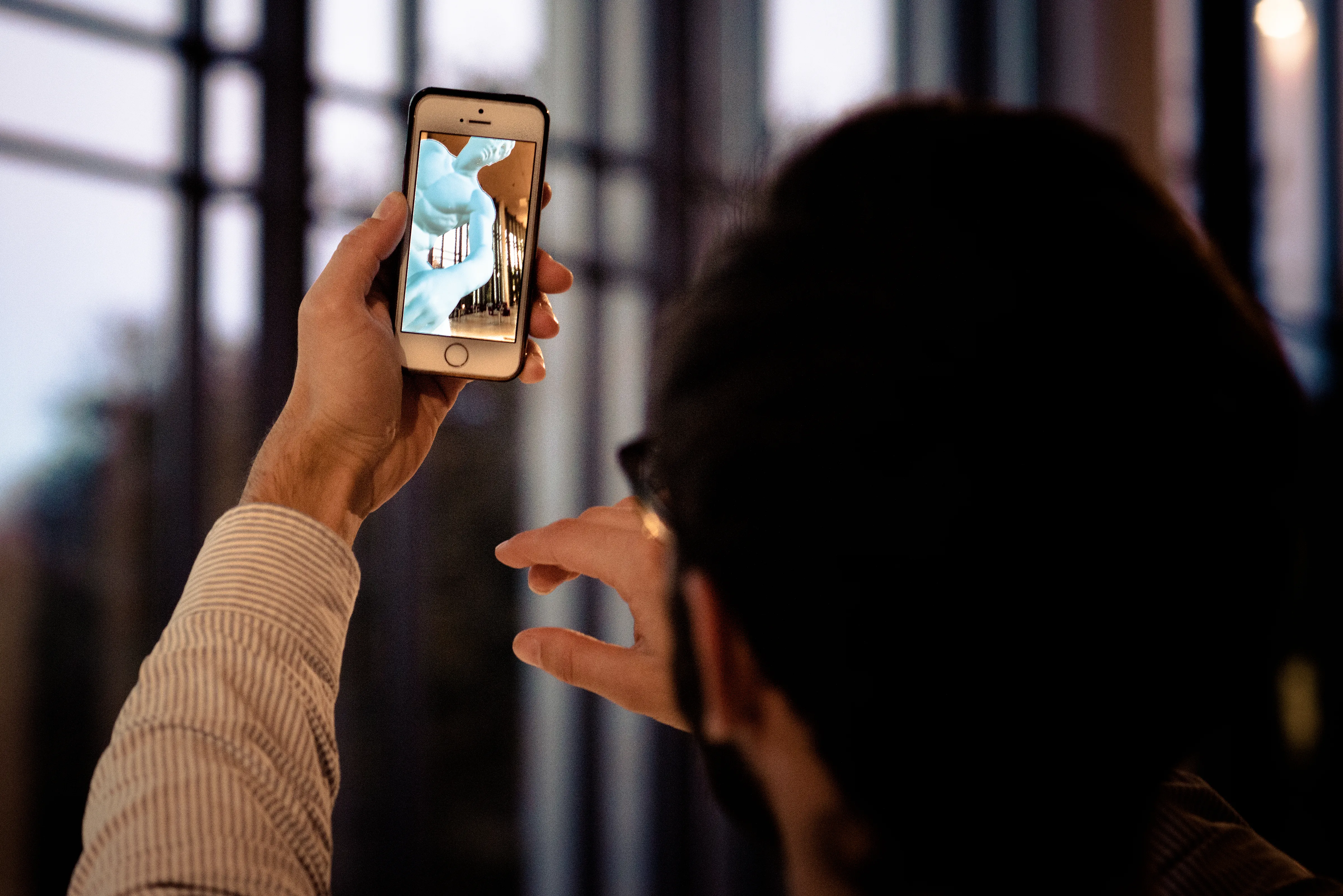 Guest at an SMK Fridays event playing with 3D scans of hard-to-access SMK sculptures
In the Times story Museum visitors seek refuge from digital world Tristram Hunt of V&A displays some skepticism as to the digital future of museums. Hunt talks of “sticking all this stuff out there for free with variable quality” and an “initial exuberance about getting everything out there as quickly as possible”.
The backdrop is a mixture of disappointing take-up rates of digital on-site tools and what Hunt calls a “very big debate” on the value of digital following recent financial trouble at The Met (for a brief intro to the latter see James Shulman’s The good news and the bad news from the Met are all one tale but also Merete Sanderhoff’s Open access can never be bad news [link no longer active]).
Now, the benefits (and whether they outweigh the costs) of digital initiatives can only be assessed with reference to the goals of an institution. Easy if you’re selling cupcakes, not so simple if you’re a large museum engaged in collecting, preservation, education, outreach, and numerous forms of research. There is no universal standard of value and efficacy. I’ll just say that again: Saying that digital (or any other museum initiative) is a success or failure in itself makes absolutely no sense.
This said, the Times’s heading does make a sort of sense. Hunt notes that “There’s a sense of people often coming into the museum to get away from digital activities”. Variation abounds but generalizing wildly, digital offerings in museums tend to underwhelm. Visitors as a whole do not enter museums with a burning desire for added layers of complexity. They are not looking for new interaction paradigms to explore (beyond the often confusing interface of the museum itself). And they are certainly not looking for representations of the very objects that they can now actually see first-hand. Why on Earth would they? Now, there are hundreds of great digital onsite museum initiatives but there are at least an equal number of failed services, usually grounded in the (generally wrong, and highly wishful) idea that visitors come with the express desire to get as much knowledge as they can possibly squeeze into their brief visit. Apps can be great, and some groups appreciate them, but in 2017 the burden of proof lies with those who claim that screen-based onsite tools are worth the expense.
But, and I apologize for the all-caps: DIGITAL IS NOT NECESSARILY ONSITE SERVICES. Giving physical visitors digital tools (apps, touch-screens or whatever) is a strategy, that only certain museums subscribe to. The range of reasons for digitizing collections — even if you don’t offer onsite tools — are legion. And incidentally, Tristram Hunt offers an important one himself:
“I think it behoves national institutions to make sure that we are talking to all parts of the country . . . to make sure that we have an offer that is not distant, that is not more concerned with Davos than Daventry.”
Amen. There’s a powerful argument for digitization if I ever heard one.
This, of course, is one thing we’re actively pursuing in the SMK Open project. The SMK collection is vast, and only a percentage of the Danish people (not to mention the world’s population) have easy access to the museum building. Once here, they’ll have easy access to less than 1% of the collection. For the collection to have impact and be useful (in digital representation, sure, but still with cause for celebration) digital is a very strong, indeed very obvious answer. Is it the answer to everything? No, but in this particular case there actually is such a thing as a silly question.