AI in our new visitor guide? Very tightly curated.
At SMK we’re hell-bent on making AI work exclusively for the museum and for our guests. We’ll gladly use it in our upcoming platform, but only in the service of accessibility and inclusion.
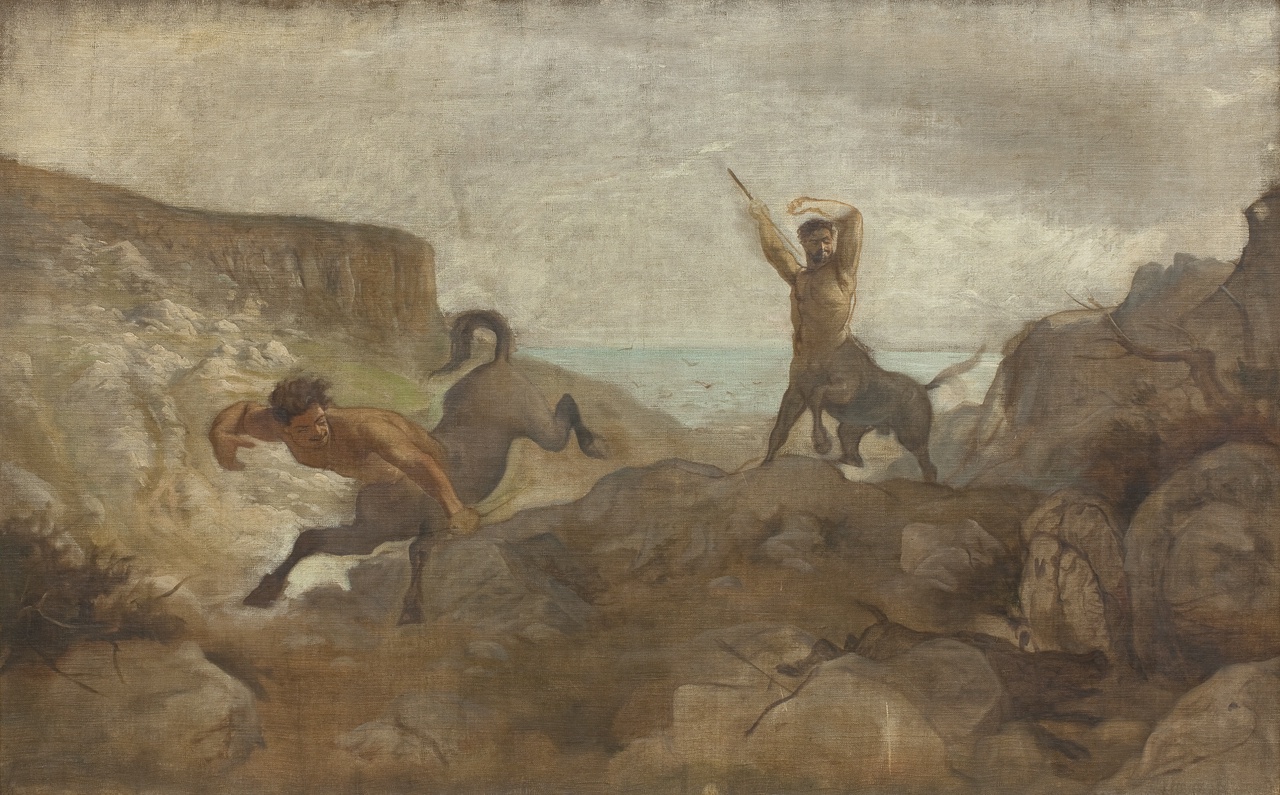 Illustration: L.A. Schou, Centaurs Hunting Boars, 1866-1867.
At SMK we first asked intelligent (if you will) machines for help in 2019. We wanted to make our collection database more welcoming by creating new connections between artworks, mainly via keywords. You know, dog, horse, ocean.
Sounds quaint now, doesn’t it? This was before generative AI appeared on the scene and way before you first heard the term slop.
Since then we’ve tried to think very carefully about how, when and if to deploy AI.
Meanwhile, we’re building a browser-based visitor guide from scratch. It’ll tie together collection data and location data to offer tours/trails, serendipitous discovery, wayfinding and other great museum things.
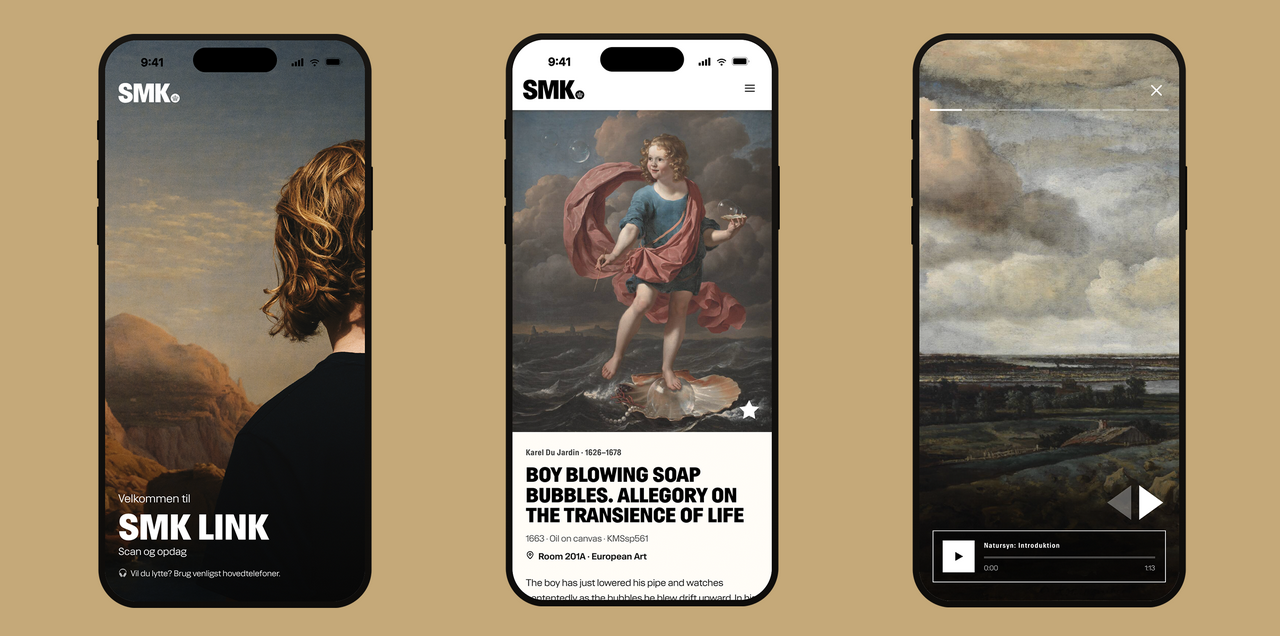 Illustration: Mockups from the SMK Link prototype
Now, in a world without AI we would write the planned 1500 new extended artwork labels by hand and have a human translate them into English. We know this, because we have lived in that world up until recently.
In this AI-enabled world what we’ll do is exactly the same.
People will write the texts in Danish, people will translate them into English. But what we’ll also do is offer machine translation into French, Italian, German and Swedish (as it currently stands) and machine-generated text-to-speech in all languages.
Of course, we won’t just trust machines to get things right without help but instead be as careful as we can about adding – and refining – dictionaries of terms across languages and pronunciation guidelines. Internally we refer to these as The Bondemalerstriden Document and The Chemise Document respectively but actually, never mind that.
In this way we hope to dramatically increase accessibility and inclusivity. If you only speak Italian, if you’re vision impaired, if you have dyslexia or if you simply prefer audio to reading (reasonable, since your eyes are presumably busy looking at the actual artwork) we hope to improve your experience with AI.
In this way we also hope to demonstrate that – while AI can certainly be used to increase confusion and imprecision – it can also be used to increase accessibility. At least we’ll try very hard. Do come by and hold us to our promises when we launch our SMK Link guide in 2027.
Written by Jonas Heide Smith, Head of Digital See also our web page AI at SMK